
There was a time in which our ability to walk large distances and bear face-to-face confrontation with wilderness with the goal of nourishing our bodies was a must in order to progress; thriving meant being the strongest. With the creation of agriculture, we humans started to obtain surpluses from our production, which gave birth to trade; thriving meant being the wealthiest, the one with most means – techniques, tools, manpower, lands or warehouses. In the 20th century, knowledge became key to everything; thriving meant being the smartest, understanding as such the one who knew the most, the one with thr greatest ability to learn.
And now, what? What do strength, means or our knowledge matter in a scenario in which access to all of them is virtually universal? At the click of a button, we have information about what to do in order to have an athletic body. Internet brings us all imaginable tools (means) in order to create books, movies, speeches, images, recipes or code. And AI has more knowledge than the highest IQ human in history will ever have. We´ve already enterned a new era of democratisation, of the breaking down of barriers. And the key becomes what the hell we choose to do with what is available to us. To thrive today, our ability to distinguish what is worthwhile from what is not is more crucial than ever. Knowing a lot is no longer the issue. Knowing what is right is. Taste, or judgement – for the essence they´re the same – is now at the heart of the matter.
On the subject of knowledge, philosopher and designer Máximo Gavete said the following in his Honos post last week:
Knowing – from the verb sapere – originally meant tasting. Not figuratively, but literally: to taste, to savour, to distinguish the sweet from the bitter, the healthy from the rotten. But also, almost without transition, to know was to judge, to discern, to have judgement. It is curious how, in this common root, palate and thought are knotted together. As if the truest knowledge was not that which is measured in data, but that which is experienced in the mouth, in the body, in that which one feels when something is right or wrong, without the need to reason it out. Strictly speaking, sapiens are those who know with taste. He who has trained his sensibility to the point of turning it into a compass.
When we´re born, we don´t know much more than bawling. Knowing, same as taste, are trained by experience. AI can gives us infinite answers, but it lacks the ability to experience. To build judgement and shape taste, living, doubting and being wrong are required, verbs that, at the present moment, seem reserved to the human realm.
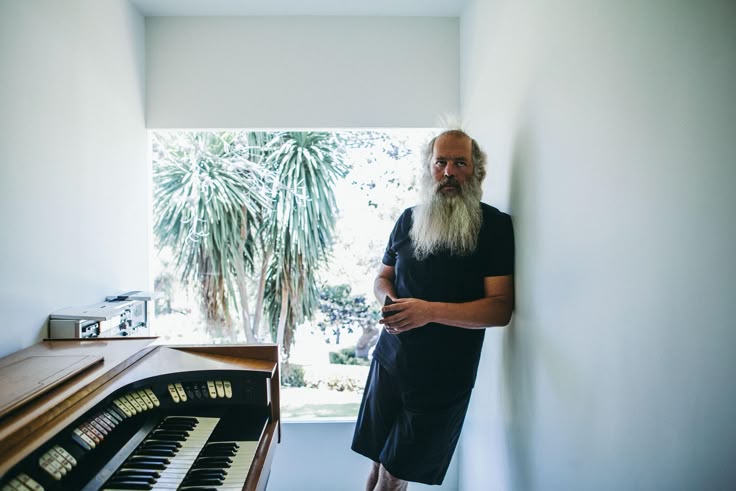
However, the overabundance that surrounds us makes this task of separating the wheat from the chaff, of distinguishing what is worthy of our time and attention from what is not, enormously complex. In this context, where do we draw the border between letting ourselves be permeated by novelty and the unkown, in order to keep evolving, and protecting our scarce attention from the distractions available 24/7, in order not to loose our way? US producer Rick Rubin says:
Everything we come into contact with has the potential to influence our taste. So the art of living well includes the art of feeding your input stream.
In other words, the same as the well-known «we´re what we eat», in order to develop taste, it is fundamental to curate our sensory consumption; all what we read, look at, listen to, savour and even smell, that is, all the things we grasp through our senses, are the ingredients that nourish our judgement.
The construction of taste is an iterative process between intuition, experience and reasoning;
The construction of taste is an iterative process between intuition, experience and reasoning; what we sense but aren´t able to explain (that photograph has a good composition, because you perceive so without resorting to arguments), what we experience (it makes me uncomfortable when people want to be the centre of attention, so being the centre of attention becomes a negative in my scale of values) and what we already know is an empirical truth (water´s chemical formula is H2O ), are all equally involved. In fact, the formation of judgement has much in common with the philosophy of Kant, who more than 300 years ago already advocated knowing the world by reason as well as by experience.
In any case, theory sounds way more attainable than practice; the development of taste happens in gerund form, and I´d suspect from anyone saying to have a recipee for it. So, as long as we humans can keep living as humans, we´ll keep having the power of experiencing, of trusting our senses, of tasting, of questioning all we perceive and, with all this, to decipher what is best and worthwhile.
Happy Saturday,
 Refugio Norte
Deja un comentario